Backstory

AD Financial serves its customers with a full range of financial products and services through award-winning digital banking capabilities and a retail banking network across the globe with a focus on helping individuals navigate each stage of their financial lives, working with large and small businesses to drive their success by providing award-winning service.
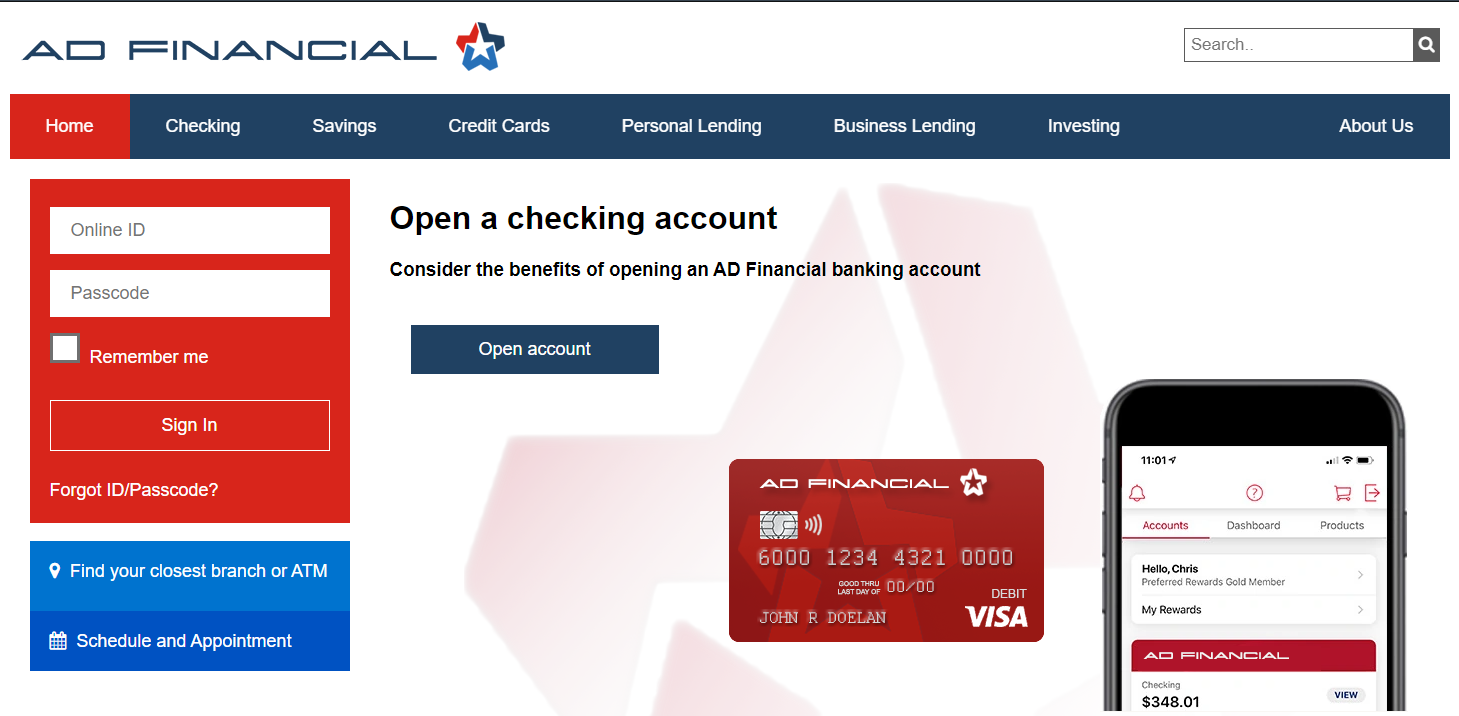
Introduction
AD Financial has experienced a surge in demand for home mortgage refinancing and small business loans over the past six months. As a result, their web site and the backend services that support it have suffered from slower loan processing times and downtimes while customer service has seen a rise in complaints from end users. There has been significant loss in revenue due to frequent downtimes and longer time to recover.
AD Financial fully intends to maintain its brand and position in the competitive financial market. The budget has been approved to proceed with the migration project that will help the company retain its competitive edge and customer loyaly. An initial assessment of the current web site and the loan processing services behind it revealed several areas that warrant further analysis.
| Recent changes to the UI framework on the web site need review | |
| Backend service FinancialServices has too many loan service functionalities tightly coupled, e.g. personal loan, business loan, etc | |
| Collocation of loan data and audit data may be constraining the database | |
| Current Monolithic architecture lacks scalability features |
Avi is the Chief Technology Officer (CTO) for AD Financial and has tasked his team leads to assess the following challenges associated with the migration effort:

1. Understand the Current Application
It has been over a year since the Dev team refactored the online application and Infra team assessed the capacity of supporting infrastructure in the data center. There is no current architecture diagram for the application and many changes have been made since its original deployment. An accurate assessment of the items below are required so the team can create a viable migration plan:
| Differentiate issues in the web UI versus the backend services | |
| Inventory of all application hosts and their resource utilization | |
| Inventory of all Database hosts and their resource utilization | |
| Core Business logic design and their interdependencies | |
| Inventory of all dependencies to backends and third-party systems |
2. Understand Key Business Transactions
Once we have an inventory of the application components, services, and dependencies, we need to understand what the key business transactions are in the application and the components they map to so we can prioritize them for refactoring during our migration effort. For example, what are the transactions that access sensitive data and require auditing? What are the key business transactions associated with services we want to refactor? To answer those questions, we need to understand the following:
| What are the transactions associated with loan processing that would be effected when decoupling services? | |
| The path those transactions take through the system with all components involved to map them out from start to finish. | |
| What specific components are causing performance degradation of key business transactions: | |
| Core Business logic design and their interdependencies |
| Web page issues? | |
| Code related issues? | |
| Database constraints? | |
| Infrastructure constraints? |
3. Select the Appropriate Migration Strategy
The landscape of new cloud services and technologies available today have made dramatic improvements in efficiency in recent years. However, the services and technologies selected and adopted need to satisfy the business and engineering requirements while also promoting adoption across the different teams involved in the migration effort.
To that end, the business:
| Anticipates the need to scale and operate more efficiently due to growing demand and higher transaction rates | |
| Looks to separate the storage and access of audit data to increase throughput and scale them independently | |
| Adopt microservice architecture for FinancialServices core business logic which is tightly coupled by breaking them down into smaller units\services making them highly available & scalable and eliminating any single point of failures | |
| Must reduce or eliminate downtime and service outages due to competing demands of reporting and loan submissions |
4. Validate Performance and End User Experience
Validating the success of our migration effort will be next to impossible without having an accurate understanding of what the application and business performance metrics are, as well as end user experience metrics, both pre-migration and post-migration. Our CTO Avi, has recommended that we capture baseline data on the following indicators for the application, both pre and post migration to validate our success:
| Overall end user experience online | |
| Business transaction performance | |
| Component and service level performance | |
| Business performance of the loan approval process |
5. Streamline Operations & Minimize Risk
The challenges associated with large modernized enterprise applications in a virtual and dynamic cloud landscape can be complex. This is especially true for the operations team that manage those production applications. Now they must support applications that utilize new cloud services and technologies they may not be familiar with. The operations team recognizes that they need to realign their strategy and operational toolset to perform efficiently and effectively while staying within their budget.
Specifically, how can the operations team:
| Be proactively alerted to pinpoint root cause before it affects the end user or impacts the business? | |
| Get deep visibility into the new cloud native services being utilized by the application? | |
| Keep performing optimally while supporting new technologies without growing the size of the team? |
Next
Let’s get started by setting up the prerequisites in your AWS environment.